Construction Jobsite Sandbags in Edmonton
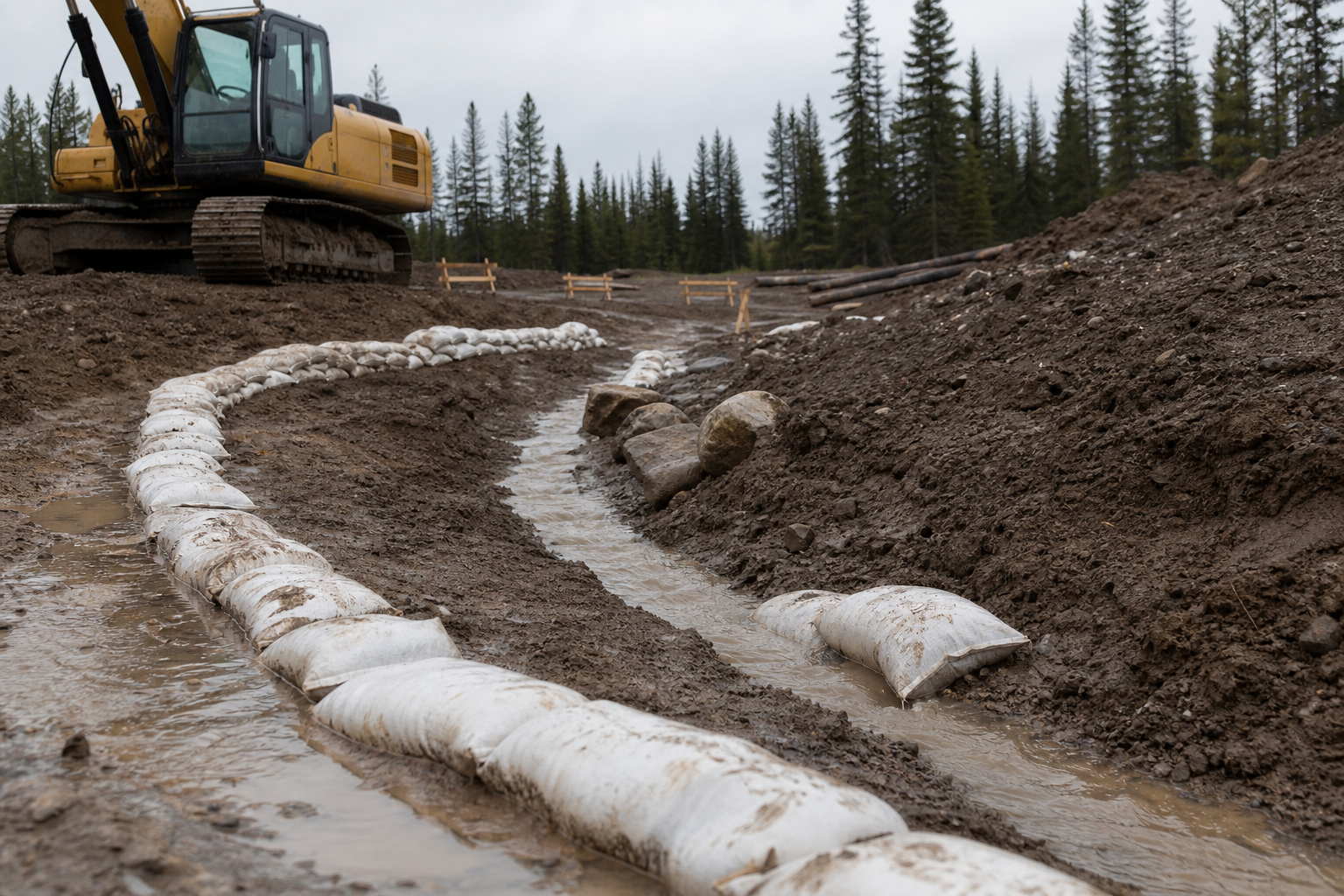
Construction crews can use pre-filled 18 kg hessian sandbags for temporary runoff direction, sediment control, and material protection when they fit the site’s erosion and safety plan. Place them before excavation, access routes, or stockpiles are exposed to forecast rain.
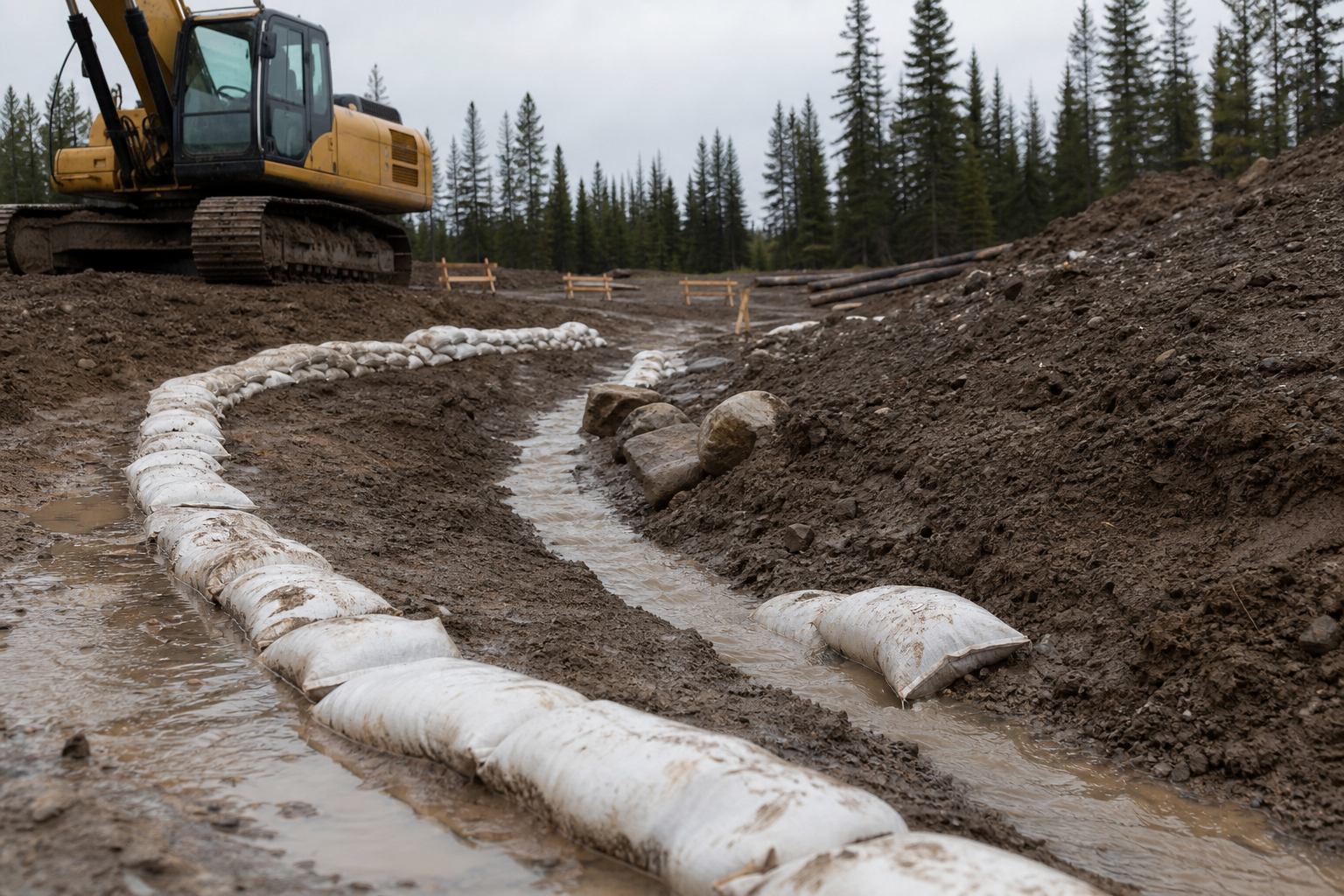
Integrate bags into the site control plan
On an Edmonton jobsite, sandbags are one small control within a larger system of grading, sediment management, dewatering, access protection, and inspection. They are not a reason to ignore permit conditions, environmental requirements, engineered drawings, or the superintendent’s weather plan. Before deployment, identify the excavation edge, catch basin protection, stockpile toe, concrete washout area, trailer entrance, material laydown, and approved discharge path. Confirm who is responsible for daily checks and what action is required when rain is forecast. A crew that knows the plan can stage materials before the surface turns slick.
Temporary controls should direct clean water around disturbed areas and slow sediment-laden water where it can be managed. Avoid creating a dam that overtops into an excavation, crosses a pedestrian route, or redirects muddy flow off site. Keep equipment operators informed: a low bag berm can be crushed by a skid steer or delivery truck if it is not marked. Use cones, stakes, signs, or site drawings to identify protected lines. If a control fails during active rainfall, pause the affected work and reassess from a safe location rather than sending workers into unstable ground.
Use durable placement patterns on active ground
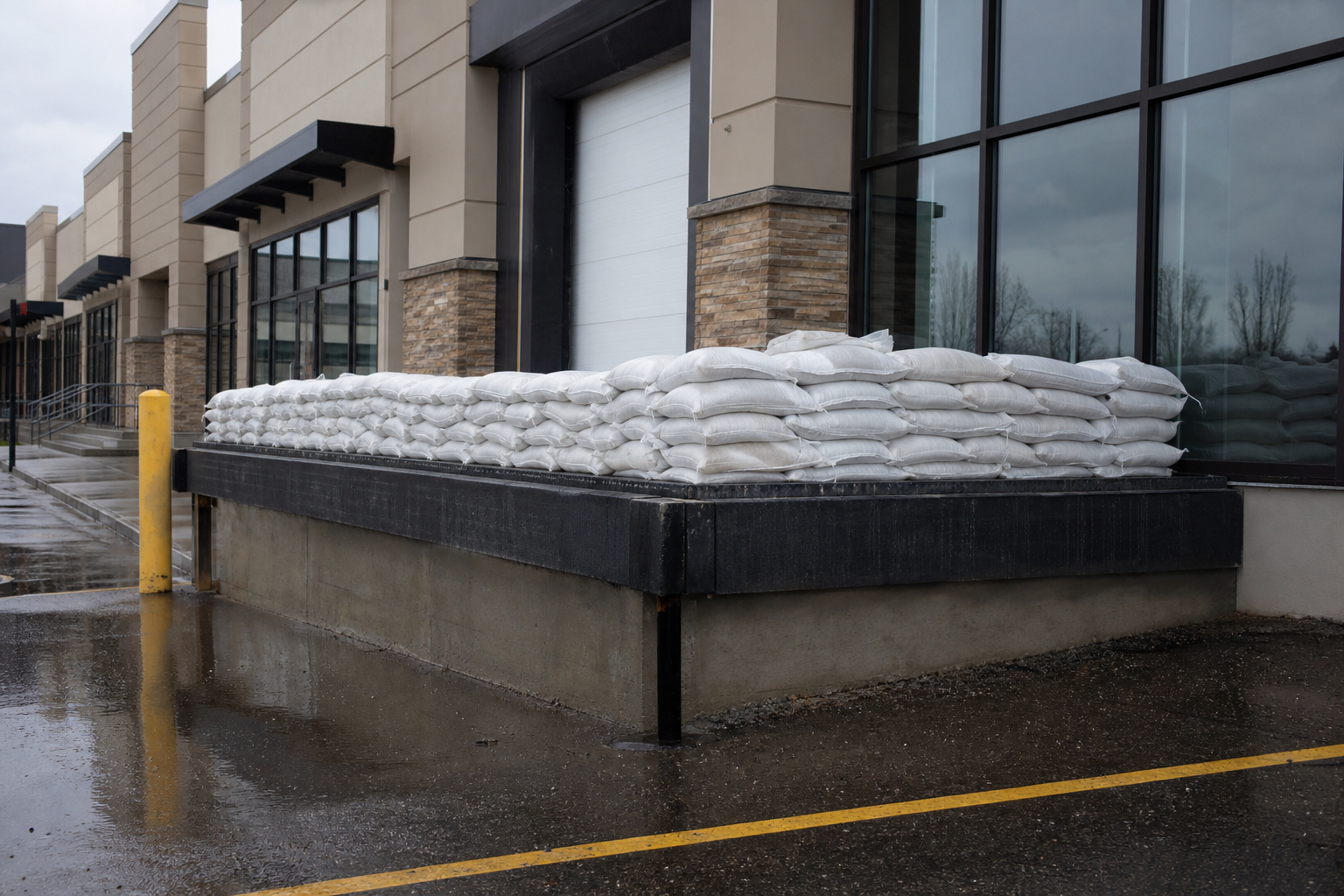
Pre-filled hessian bags are useful because they can be positioned without bringing loose sand to a constrained site. For a stockpile perimeter, make a shallow horseshoe on the downslope side and leave a controlled route where clean water should pass. For a trailer door or temporary electrical enclosure, form a low winged deflection line that does not block access. For a shallow channel check, place bags across the flow only when the erosion-control design calls for it and the water can pass slowly over or around the structure without scouring the edges. Offset joints, tamp the bags into contact, and key the ends into stable ground.
- Inspect before shifts, after rainfall, and after heavy equipment changes the grade.
- Keep bags clear of crane paths, haul roads, trench exits, and designated walkways.
- Use proper lifting practices for the approximately 18 kg units.
- Do not use a temporary berm as trench protection or slope stabilization.
- Replace torn bags and repair undercut ends before the next weather event.
Excavations require their own safety controls. Do not position workers at an unprotected edge to stack a barrier, and do not let collected water mask a cave-in hazard. Dewatering discharge must follow the project’s approved method; sandbags may shape a small settling area but do not automatically make discharge compliant. Keep fuel, chemicals, curing compounds, and waste bins out of potential flow paths. A clean, well-marked site is easier to inspect and less likely to spread sediment onto public roads.
Schedule supply around trades and access
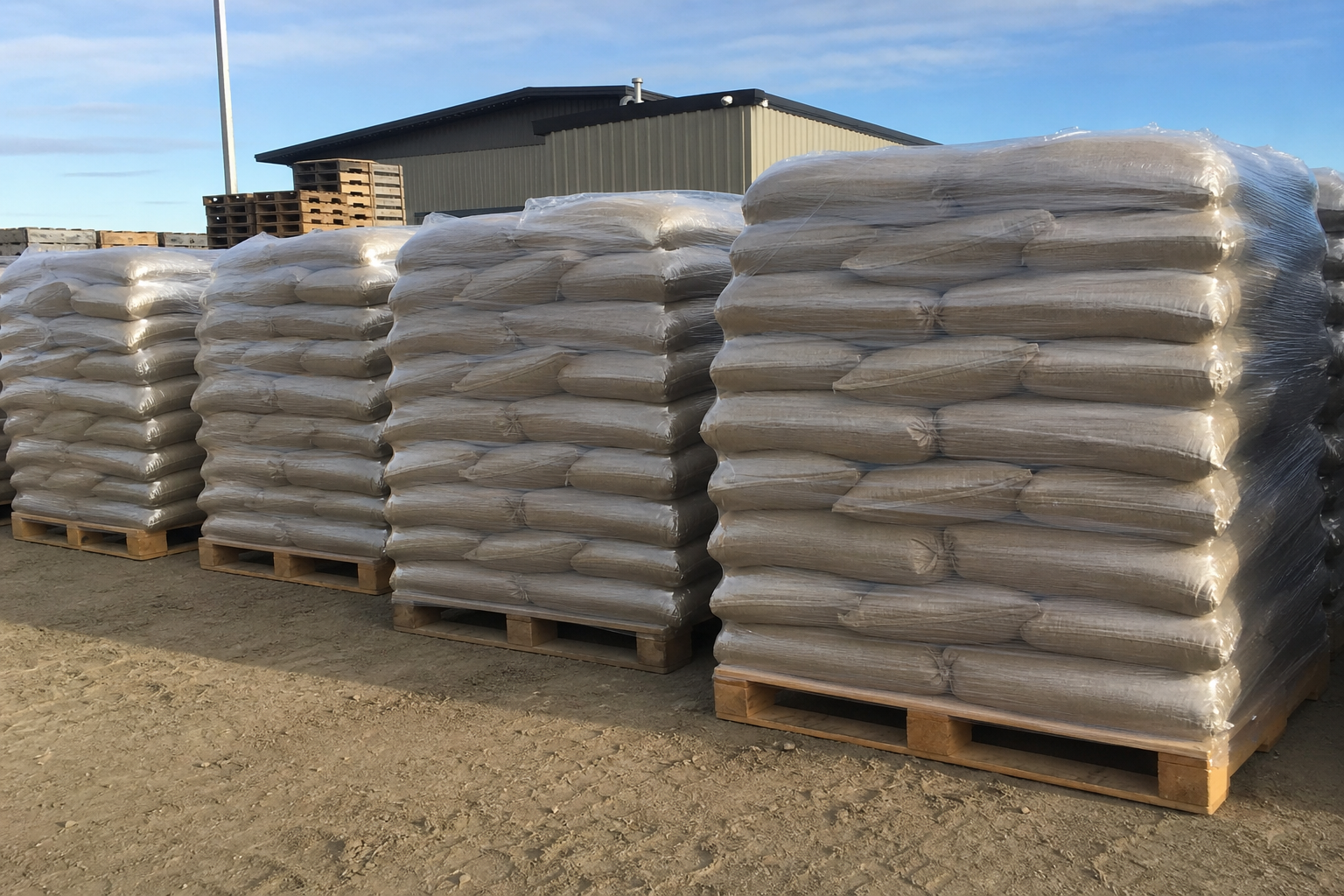
Edmonton Sandbags supplies pre-filled 18 kg hessian bags for $4.99 each, with a minimum order of 10. Estimators should count the length of each planned control, include overlap at transitions, and reserve units for repair after equipment movement. A short berm may use dozens; a large perimeter or multiple phase areas can use far more. Include bag needs in the look-ahead schedule, especially before stripping, utility work, landscaping, or seasonal shutdown. The request form at SandBags.ca can capture site contact, gate hours, delivery direction, and anticipated quantity.
Delivery is $0.90 per kilometre, subject to a $10 minimum for distances under 10 km. Provide a legal, stable drop location where a vehicle can turn without entering a soft excavation zone. If the site needs material outside normal hours, collect it through 24/7 pickup at 4315 118 Ave NW, Edmonton, AB T5W 1A5. Call 1-888-552-7263 to coordinate loading or verify availability. Secure every bag load; an unsecured pallet or loose stack is a transport hazard before it ever becomes an erosion-control measure.
Close out temporary controls responsibly
At the end of a rain event or project phase, inspect the perimeter for sediment accumulation, undercutting, and displaced fabric. Remove controls only after permanent grading, inlet protection, vegetation, paving, or other specified measures are ready. Reuse clean, intact bags where the project plan permits, storing them dry and off the ground. Segregate bags that contacted contaminated water or hazardous material and dispose of them under the applicable site procedure. Document repairs in the inspection record, including photographs where required.
Good temporary control is visible, maintained, and tied to the next construction activity. It is not a forgotten pile at the edge of the lot. Review jobsite rain readiness for planning ideas and construction sandbag supply for order details. By treating bag placement as part of the work sequence, a crew can protect access, reduce sediment travel, and keep the schedule moving through Edmonton’s variable weather.
Verify controls at changing project stages
Construction leadership should revisit temporary controls whenever excavation, paving, landscaping, utility installation, hauling, or occupancy changes the drainage picture. Update the site map, toolbox talk, inspection checklist, emergency contacts, material locations, and subcontractor instructions. Record the reason for each repositioned berm and confirm workers understand access limits. This disciplined review keeps short-term measures aligned with current conditions instead of yesterday’s grading.
FAQ
Can sandbags replace engineered erosion controls?
No. They are a temporary site-control material and must be used within the approved project, environmental, and safety plan.
How should a superintendent plan bag quantities?
Measure each berm or perimeter, add overlap and repair stock, then include the requirement in the short-term construction look-ahead.
What does jobsite delivery cost?
Delivery is $0.90 per kilometre, with a $10 minimum under 10 km; bags are $4.99 each with a 10-bag minimum.
Where can a crew pick up materials?
Edmonton Sandbags offers 24/7 pickup at 4315 118 Ave NW, Edmonton, AB T5W 1A5.