Edmonton Neighbourhood Flood Preparation by Property Grade
Edmonton flood preparation should match the grade of the property: mature south-side lots, west-end swales, northeast low points, and river-valley slopes shed water differently. Pre-filled sandbags provide temporary direction for surface runoff while permanent drainage systems do their job.
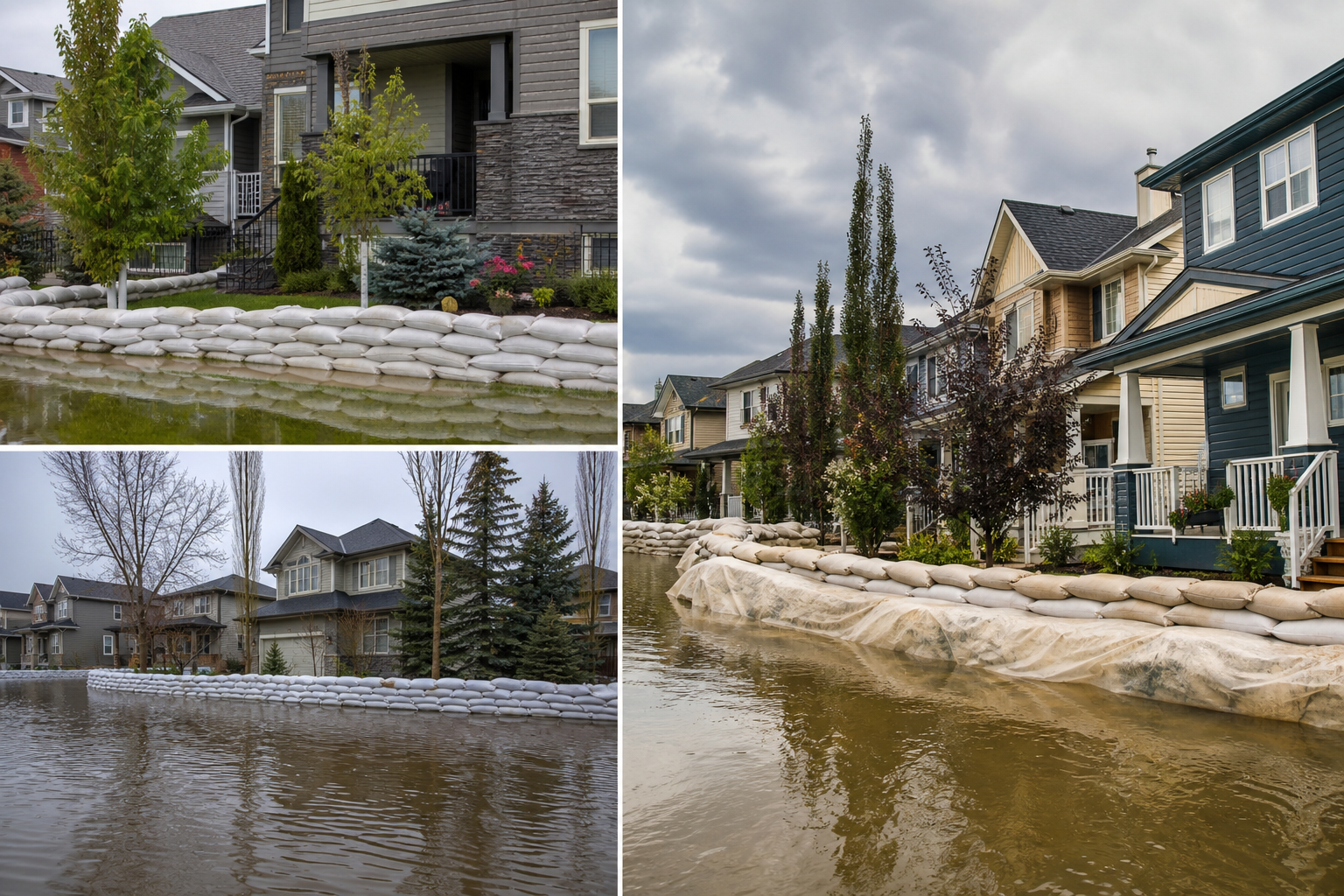
Match the response to the block
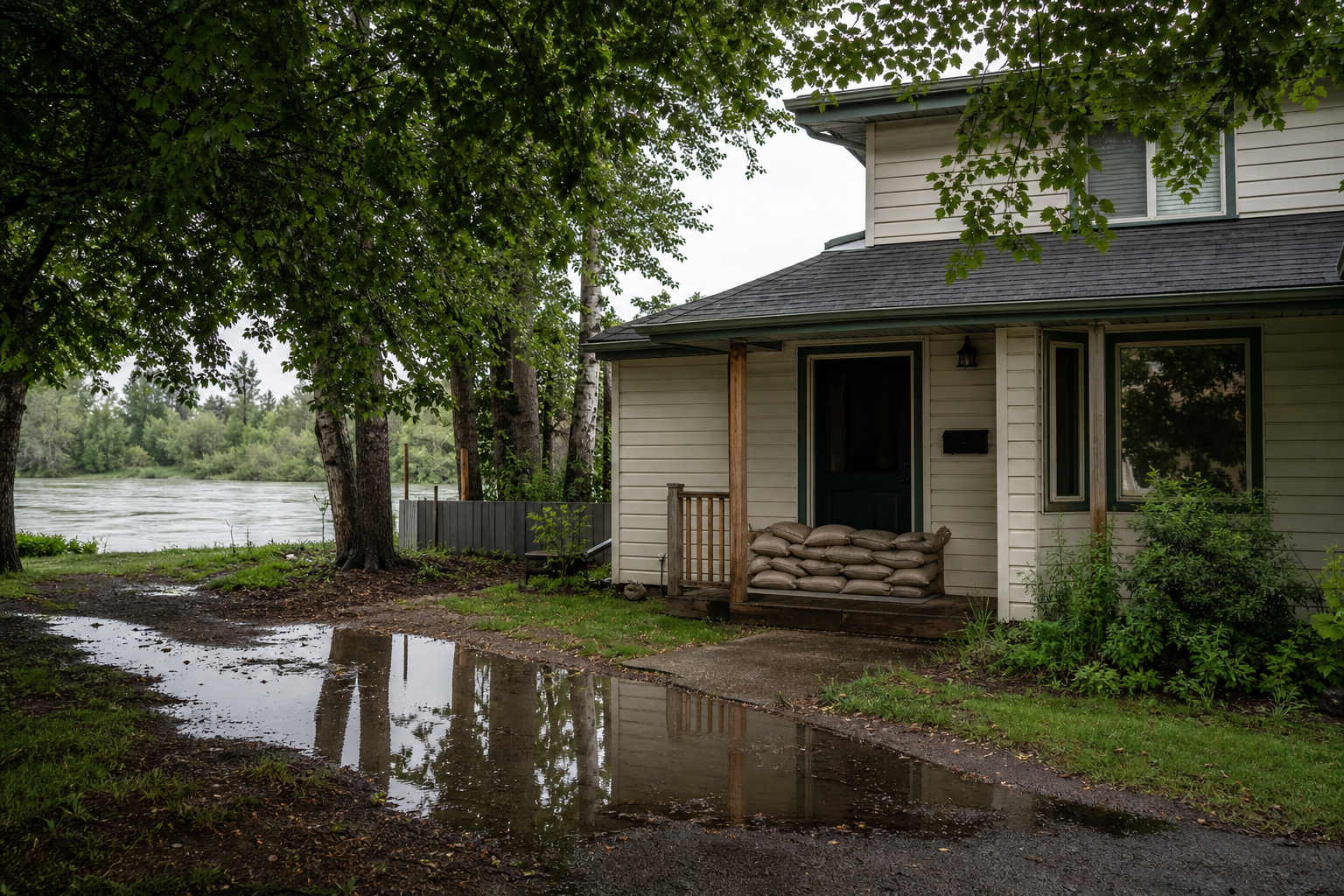
One Edmonton-wide sandbag plan is rarely accurate. A mature south-side home may have old trees, settled concrete, narrow side yards, and a back-lane garage that sits below a neighbouring grade. A west-end subdivision may have broad lawns, curving streets, and swales designed to carry water between parcels. Northeast properties can face open exposure, newer grading transitions, or runoff from large paved approaches. Near river-valley grades, the central concern may be slope movement and fast surface flow, where personal safety and official directions take priority. Start with the individual lot, then understand how the block sends water.
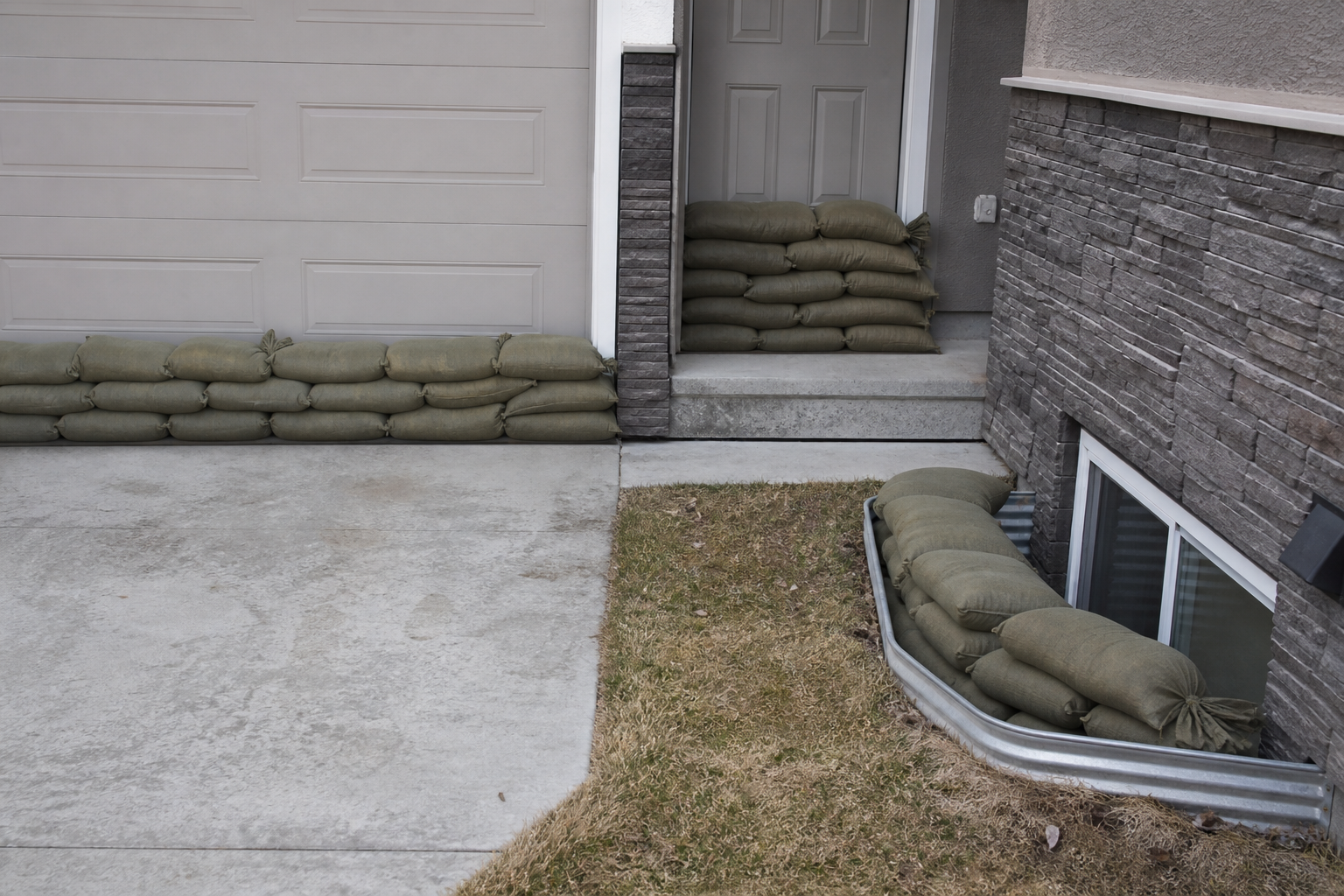
Walk outside before the next heavy rain with a notebook. Record roof outlet locations, the basement stair, window wells, garage threshold, low fence gate, and any point where paving has settled. Ask where water leaves the parcel under normal conditions. Do not alter a shared swale, block a sidewalk, or route water onto a neighbour’s driveway. City drainage infrastructure and private landscaping must work together. A temporary bag layout should preserve the intended drainage route while protecting the one weak opening that cannot tolerate ponding.
Adapt tactics for south and west Edmonton
On mature south Edmonton lots, inspect the seam between an older patio and the foundation, particularly where tree roots or frost movement have changed the slope. Use a low, curved diversion to carry sheet flow around a basement stair rather than piling bags tightly against siding. Clear eavestrough outlets and make sure extensions do not end beside a cracked walk. If an alley garage has a shallow apron, bags can guide water across the lane-side edge toward the existing low channel, but never create a berm that backs water into another garage.
For west-end swales, the critical discipline is restraint. Those gentle grass corridors may look like spare yard space, but they are intended to move stormwater. Keep them clear of soil piles, patio furniture, and improvised walls. Place bags at a vulnerable doorway on the side away from the swale, forming a short wing that blends back into higher grade. If a lawn depression is carrying water properly, let it do so. Forcing it toward a foundation usually causes more trouble than accepting a temporarily wet patch of grass.
Address northeast exposure and valley slopes
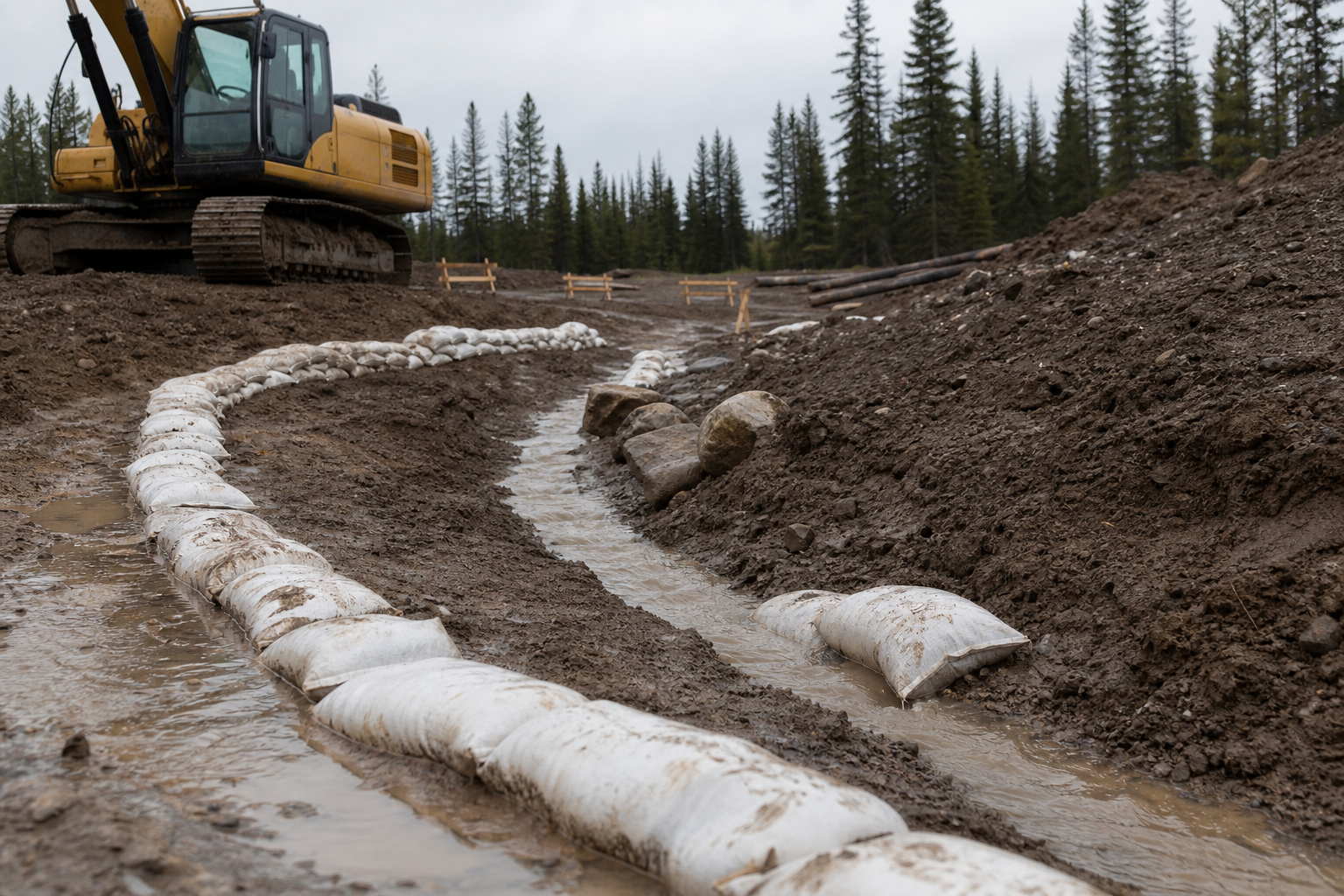
Northeast Edmonton homes and commercial yards may have long driveways, broad roof planes, or open approaches where wind-driven rain concentrates at one corner. Examine catch basins near the property without opening them, keep leaves out of private drains, and move vehicles away from known low spots. A staggered bag line along the high side of a garage apron can steer runoff toward a safe curbside route if it does not impede pedestrians or traffic. Use bright markers at night so nobody trips on a low barrier.
- For river-valley grades, stay away from unstable slopes, ravines, and moving water.
- Follow municipal advisories before attempting any work near a closed path or bank.
- Protect a door or shed only from safe, stable ground above the flow.
- Do not stack heavy bags where their weight could contribute to a fragile slope edge.
- Call emergency services for an immediate threat to life, not a supplier dispatch line.
River-valley homes require special caution because a surface-water issue can coexist with erosion or slope instability. Sandbags can redirect a shallow trickle at a patio threshold, but they cannot stabilize land. Photograph cracks, leaning fences, or sudden ground movement from a safe position and seek qualified advice. Keep drainage outlets open rather than trying to contain all water uphill.
Stage supplies before the forecast escalates
Edmonton Sandbags offers pre-filled 18 kg hessian bags at $4.99 each, with a 10-bag minimum. Estimate the base length and allow for overlapping ends, then store gloves and a flashlight near the planned placement area. Delivery is $0.90/km, with a $10 minimum for trips under 10 km. Alternatively, collect materials 24/7 at 4315 118 Ave NW, Edmonton, AB T5W 1A5. Call 1-888-552-7263 if loading access or order size needs confirmation.
A bag is easier to control before it becomes soaked, so stage only what is needed near the threshold and keep the remainder covered. Ask household members who will move vehicles, who will monitor the sump pump, and who will check the safe discharge point. The quote form at Edmonton Sandbags is useful for a planned purchase, while Edmonton sandbags lists local availability.
Review the lot after every major rainfall
When the pavement dries, compare the notes with what actually happened. Did the west swale carry water as designed? Did a south-side downspout overflow? Did northeast wind push water under a door seal? Adjust landscaping, extensions, and future bag positions using evidence. Clean, undamaged hessian can be kept dry for another surface-water response, but contaminated bags require careful disposal. For broader maintenance ideas, see the Edmonton yard drainage checklist. Local preparation is a routine of observation, not a one-time pile of supplies.
Share a block-level readiness routine
Edmonton neighbours can exchange observations without changing one another’s drainage: identify recurring sidewalk ponding, remind one another to clear private roof outlets, and share municipal notice links. Maintain a household list of basement valuables, vehicle keys, battery power, safe routes, and emergency contacts. A calm pre-rain conversation makes temporary bag placement faster while respecting shared swales, accessible paths, roadway safety, and each property owner’s boundaries.
FAQ
Should river-valley homeowners use bags on slopes?
Only for shallow runoff from safe stable ground; bags do not stabilize a slope and should not be placed near a fragile edge.
What is the Edmonton bag price?
Pre-filled 18 kg hessian bags are $4.99 each, with a minimum purchase of 10.
Can a west-end swale be blocked?
No. Preserve shared swales and use a short protective wing around the vulnerable opening instead.
Is pickup available all night?
Yes. Pickup is available 24/7 at 4315 118 Ave NW, Edmonton, AB T5W 1A5.
Also see our local page: Sandbags Edmonton