Flood Readiness for Alberta Businesses: Put Sandbags in the Continuity Plan
A flood response plan should answer who does what before water threatens stock, equipment, customers, or payroll. Sandbags belong in that plan as a defined action, not a vague supply item.
Start with continuity, not cleanup
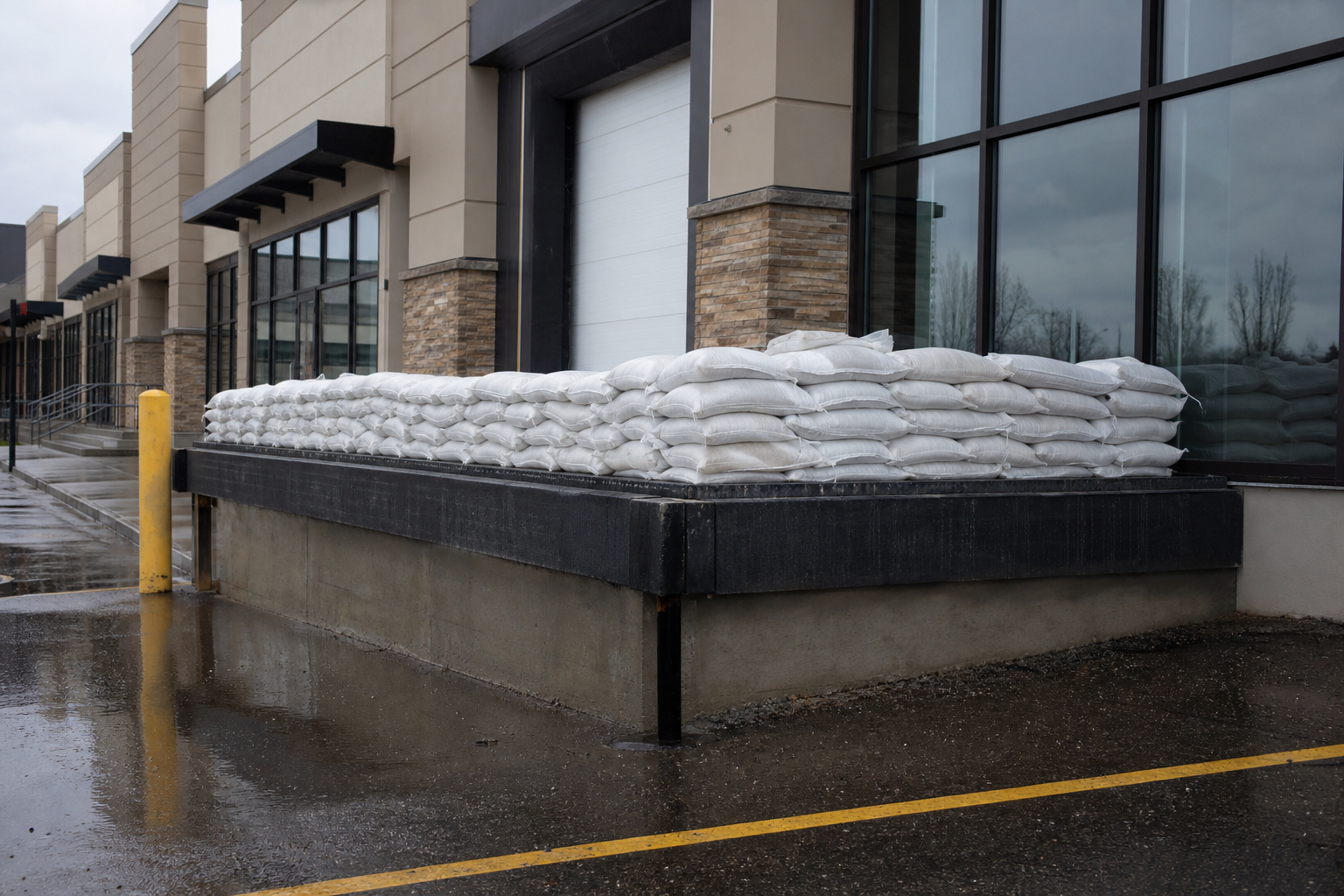
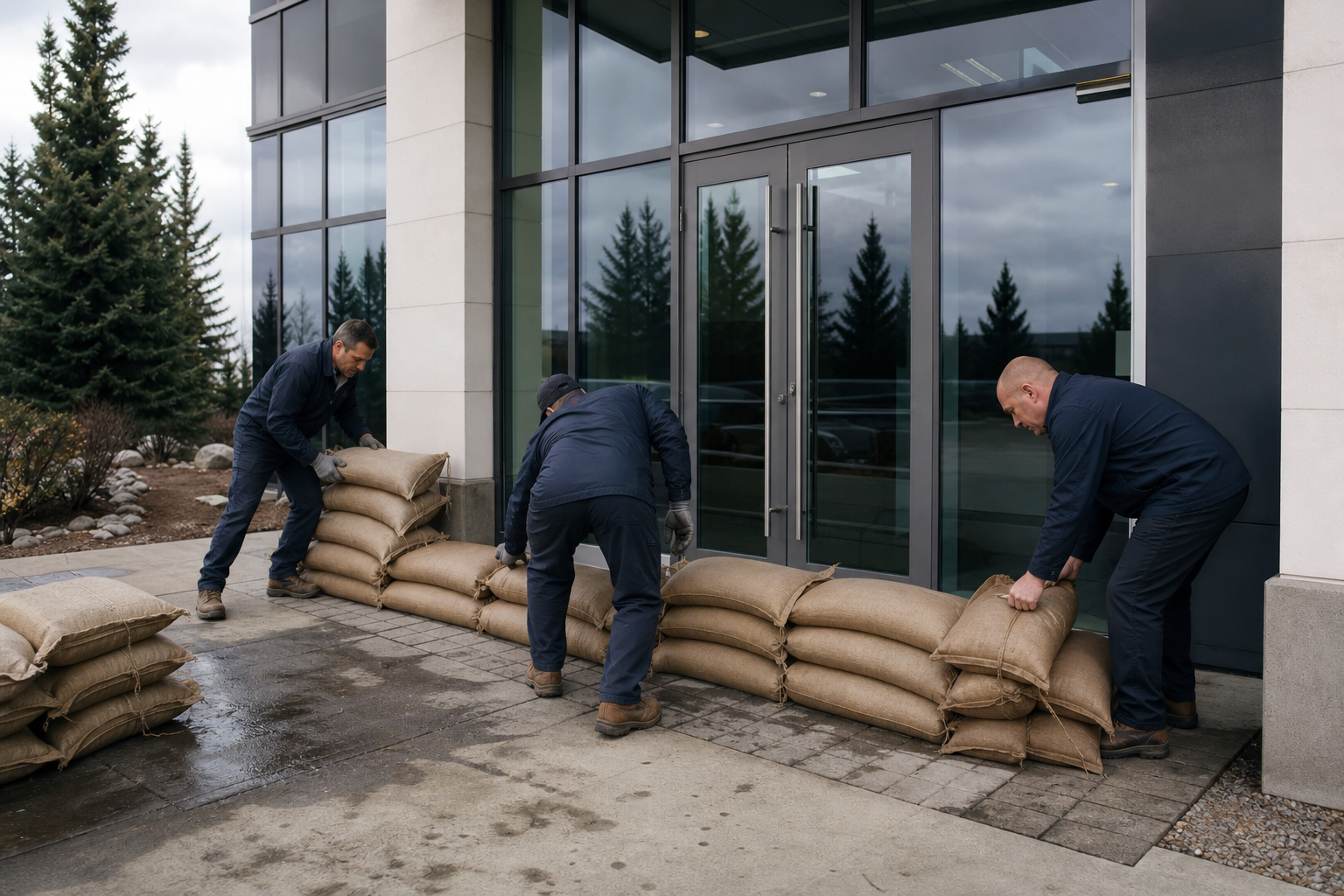
Flood readiness is often treated as a facilities concern until a storm interrupts sales, shipping, customer service, or production. A stronger Alberta business plan starts with continuity questions: which operations must continue, which space is essential, which equipment cannot get wet, and when does the business switch to an alternate workflow? Sandbags can reduce water entry at a doorway, dock, ramp, or low opening, but they work best when they support a broader decision. Your plan should specify the trigger for deployment, the people authorized to act, and the time limit before a customer-facing or operational change begins.
Walk the premises with a floor plan and mark physical weak points. Look beyond the front entrance. Loading doors, rear exits, elevator pits, storage cages, electrical rooms, server closets, and floor drains may matter more to continuity than the lobby. Write a short action beside each point: clear drain, move inventory, shut down equipment, install sheeting, or build a sandbag barrier. Assign a priority based on consequence, not visibility. A barrier around an electrical room may deserve attention before a door that only affects a hallway.
Give every staff member a defined role
During a weather event, vague instructions create duplicate work and missed tasks. Use a compact incident roster with a lead, a facilities responder, a safety observer, an operations coordinator, and a communications contact. The lead decides when the plan starts. The facilities responder checks the site and directs barrier placement. The safety observer stops unsafe work and ensures staff do not enter hazardous water or lift beyond their ability. The operations coordinator protects records, inventory, and technology. The communications contact keeps employees, vendors, and customers informed about access, delays, or temporary closure.
Small businesses can assign multiple roles to the same people, but every role needs a backup and a current telephone number. Practice the call tree once before the high-risk season. It is much easier to learn that a key holder is unreachable during a drill than during an active leak. Include emergency supplier details: Edmonton Sandbags, also known as SandBags.ca, can be reached at 1-888-552-7263, and its 24/7 pickup location is 4315 118 Ave NW, Edmonton, AB T5W 1A5. Keep the address in the plan, not only in someone’s browser history.
Make sandbag decisions measurable
“Get sandbags if it rains” is not a usable instruction. Instead, define conditions that cause action. Examples might include water approaching a marked curb level, a drainage issue reported by a neighbour, a warning from the building owner, or a forecast combined with a known site vulnerability. The trigger should prompt a checklist: inspect drains, move stock off the floor, confirm sump operation where applicable, retrieve the barrier materials, and notify the incident lead. For rented space, identify which responsibilities belong to the tenant and which belong to the landlord before an event. That clarification can prevent costly delay.
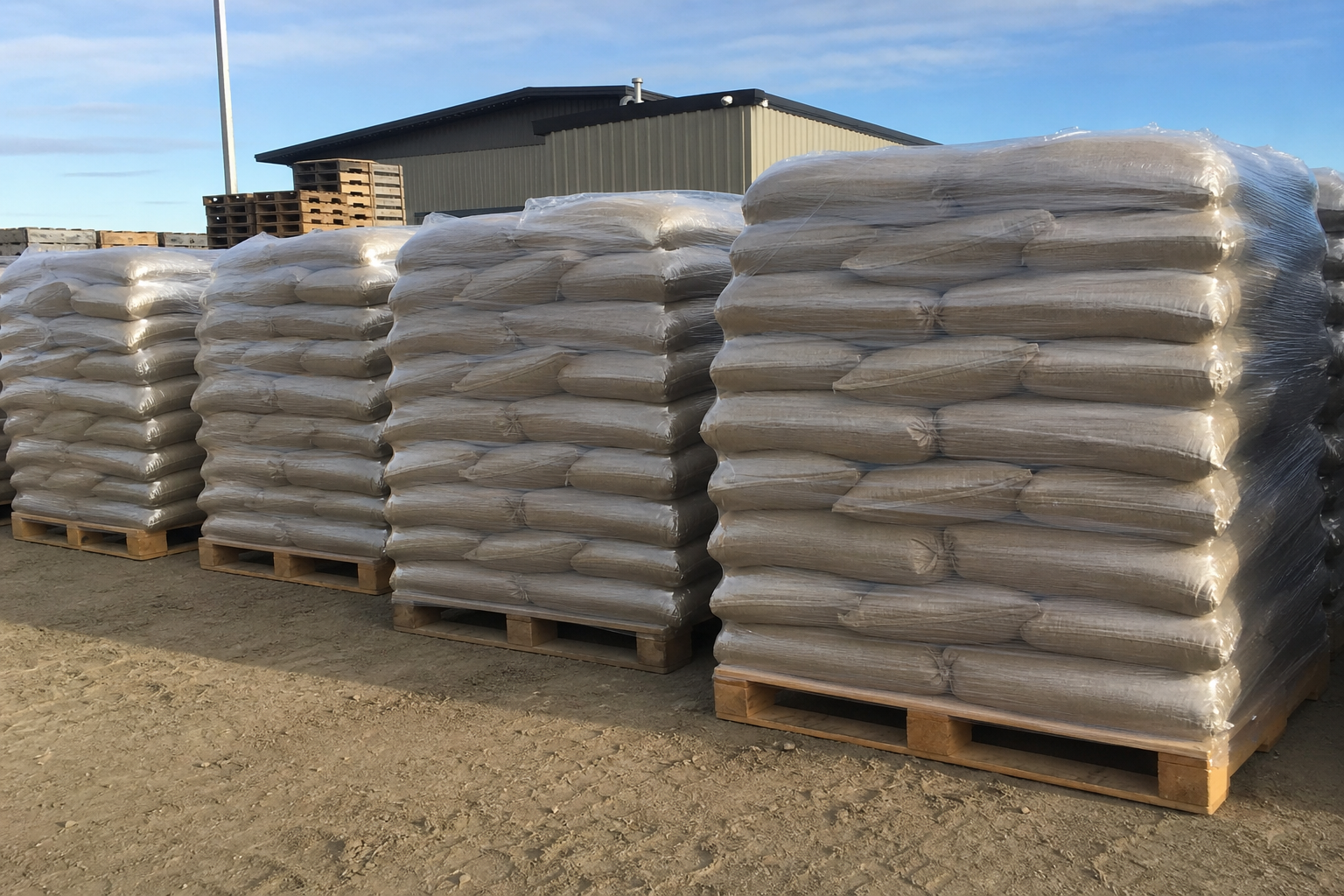
Pre-filled 18 kg hessian bags simplify the supply portion of the checklist. Edmonton Sandbags sells them for $4.99 per bag with a 10-bag minimum. Measure each opening in advance and record an initial quantity beside it. Do not rely on a visual guess during a downpour. For a tailored order, staff can use the quote request. A supplier link is useful, but the plan must still say where bags will be staged, who can access them, and what vehicle or delivery instructions apply.
Preserve evidence while protecting the operation
Insurance readiness is principally about knowing your policy and documenting facts, not about assuming any particular loss will be covered. Review coverage, deductibles, reporting requirements, and contact information with your insurer or broker well before an incident. Keep copies of policy documents and a current inventory away from the vulnerable area. Photograph key equipment, stock areas, and exterior drainage conditions during normal operations. If water threatens the site, take time-stamped photos or video from a safe location before, during, and after mitigation work. Save receipts, invoices, work logs, vendor details, and communications related to the event.
Documentation also improves business decisions. A log can show when water was first observed, when staff deployed barriers, which areas were affected, and what operations changed. That record helps with an insurance discussion, but it also supports a post-event review. Avoid making coverage promises in a staff manual; use neutral language and tell employees to preserve evidence and route claim questions to the designated contact. Focus their task list on safety, response, and accurate notes.
Protect people and the next day of work
Flood response can include slips, traffic, contaminated water, fatigue, and electrical hazards. Set limits: staff do not work alone in dangerous conditions, do not enter standing water where electricity may be present, and do not continue a task that needs specialized help. Provide gloves, lights, high-visibility gear when appropriate, and a way to communicate. Sandbag placement should be paced to avoid injuries. A pre-filled bag weighs 18 kg, so use teams, carts, and sensible lifting practices for a larger barrier.
Continuity also means deciding when to close, reroute, or work remotely. Tell customers early if a loading door is unavailable or a pickup area is changing. Back up digital records, elevate portable electronics, and prepare a separate work location where feasible. A sandbag line is successful when it buys time for these essential actions, not when it encourages people to remain in a risky situation.
Turn each event into an improvement
After the immediate threat ends, meet briefly with the staff who used the plan. What trigger arrived too late? Which role was unclear? Did the planned number of bags cover the opening? Were contact details correct? Update the plan while the observations are specific. Replenish the stock, archive the event record, and revise vendor instructions before the next severe-weather period. Businesses that treat readiness as a working operating procedure are better able to protect their people, documents, and ability to reopen.
FAQ
Who should authorize sandbag deployment?
Name a primary incident lead and a backup in the continuity plan so staff can act without waiting for an unclear approval.
Are sandbags an insurance guarantee?
No. They are a mitigation tool. Review your coverage with your insurer or broker and document conditions and response actions.
What bags are available?
Edmonton Sandbags provides pre-filled 18 kg hessian bags at $4.99 each, minimum 10.
Where can a business collect an urgent order?
24/7 pickup is available at 4315 118 Ave NW, Edmonton, AB T5W 1A5.