Heavy Rain Runoff Protection for Edmonton Homes
Heavy rain usually enters Edmonton homes as moving surface water, not a dramatic river. A short, well-placed sandbag run can slow that runoff long enough to steer it past a vulnerable doorway or foundation crack.
Read the yard before the clouds arrive
Runoff follows shape, so begin with a walk around the house during a calm afternoon. Look for bare soil channels, flattened grass, mulch washed away from beds, and concrete joints that point toward the building. Downspouts are especially revealing: a discharge landing beside a wall can put hundreds of litres against the footing during one thunderburst. Mark the lowest route from the back yard, side lane, driveway, and neighbouring grade. The useful question is not where water collects after a storm; it is which path delivers it to the house first. Photograph those routes and note where a barrier would have a safe exit. This small survey prevents a common mistake: building a wall that merely pools water against siding.
Edmonton lots can have compacted clay, gradual driveways, and mature landscaping that hides a shallow swale. A five-centimetre ridge can change the direction of a sheet of water. Clear leaves from eavestroughs, uncover catch basins where appropriate, extend downspouts toward a suitable discharge area, and move loose planters from drains. Sandbags complement those measures; they are not a substitute for grading or a blocked sewer repair. If water repeatedly reaches the same wall on ordinary rain days, make a longer-term drainage plan after the emergency has passed.
Choose a diversion route, not a dam
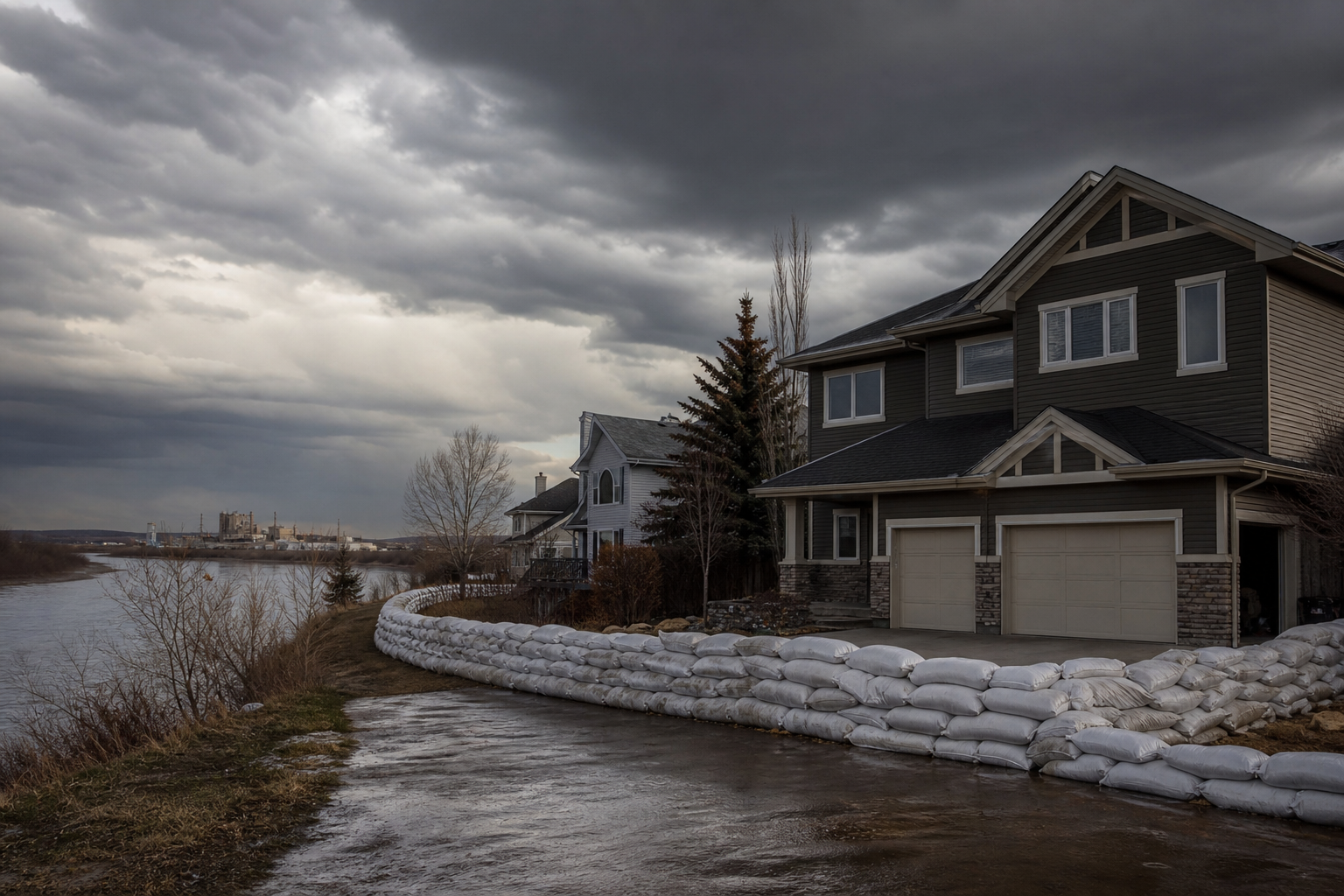
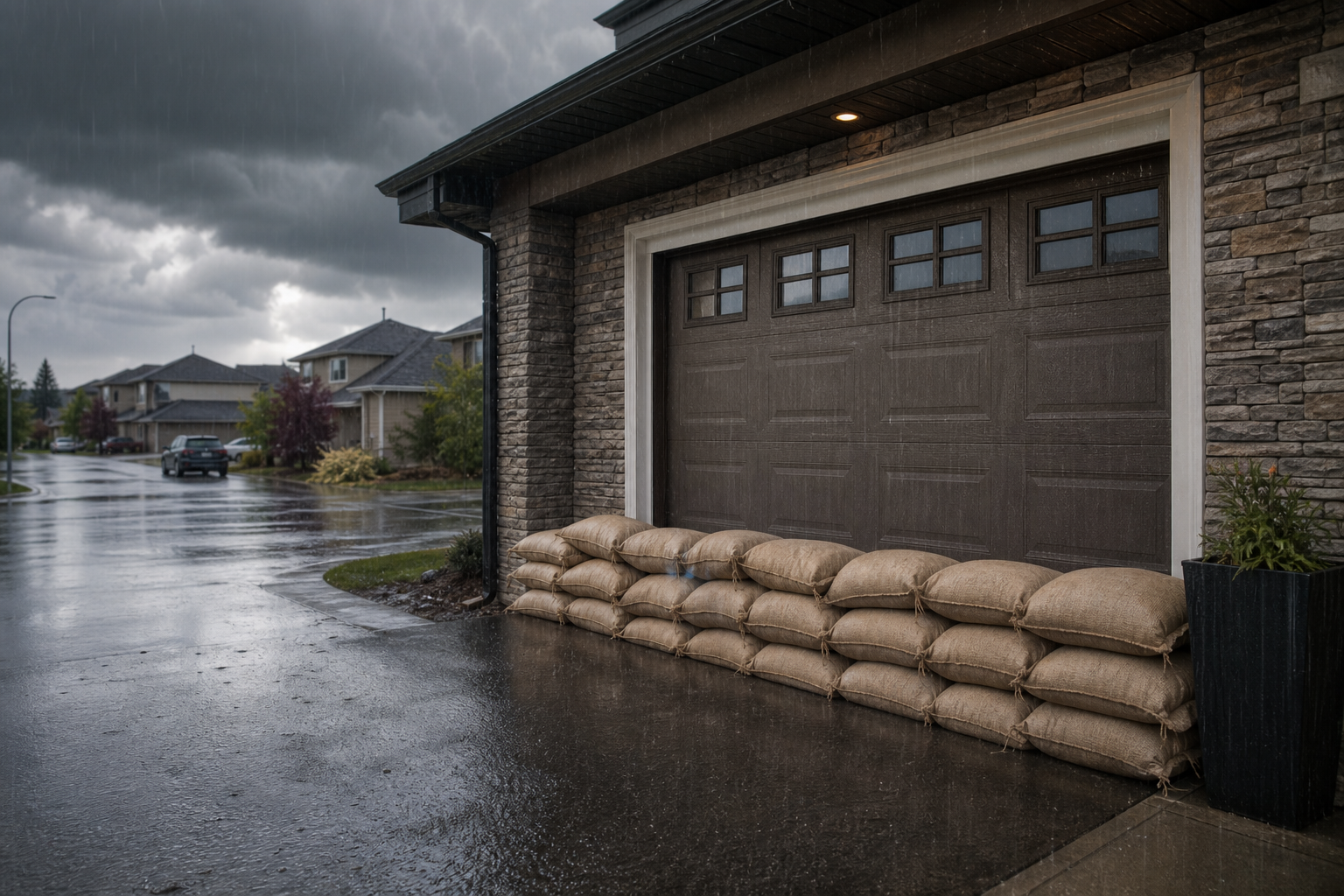
The strongest temporary layout resembles a gentle V, a crescent, or a diagonal guide rather than a straight barricade across the entire yard. Place the open end toward an area that can accept water without sending it into a neighbour’s property, a sidewalk, or an electrical hazard. Start the line on higher ground and angle it downhill past the threatened opening. For a basement stairwell, shape the bags as wings leading from both upper corners toward the lawn. For a garage apron, protect the lowest corner first and guide flow along the driveway edge. Leave clearance around public sidewalks and do not obstruct an accessible route.
- Keep the barrier several feet away from a wall when space permits, so water has room to turn.
- Use a plastic sheet beneath the first course on rough gravel or pavement to reduce seepage under it.
- Lay bags lengthwise with their folded ends tucked under the next bag.
- Stagger every course, like brickwork, instead of stacking seams directly above one another.
- Press each row flat with a foot; an uneven bag creates a channel.
Water will find openings at the ends, under the base, and between poorly seated bags before it overtops a low wall. Spend more attention on those details than on making a tall display. A two-course diversion that drains freely often performs better than an unstable five-course pile.
Stage the right amount of weight
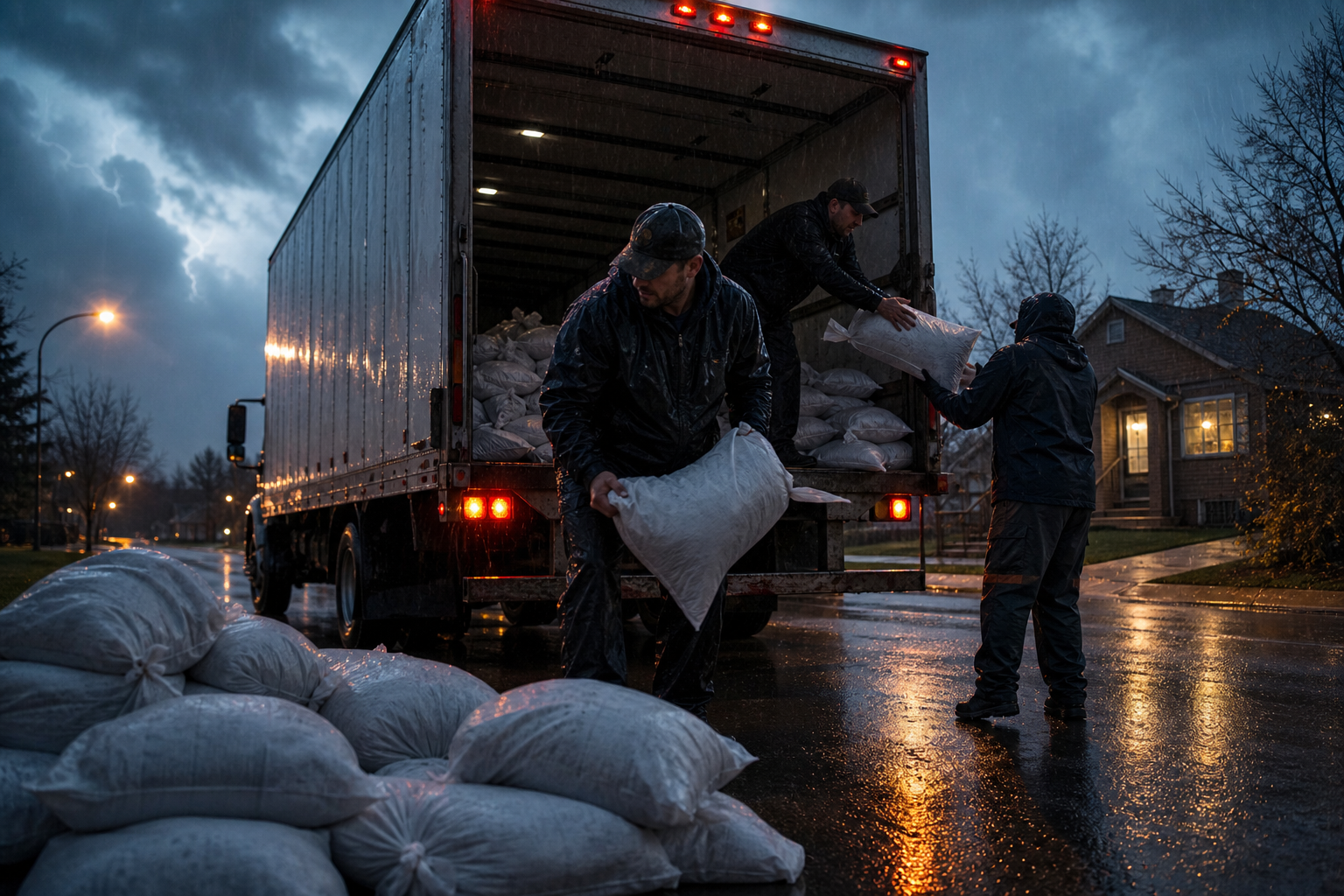
Edmonton Sandbags supplies pre-filled 18 kg hessian bags, which are practical for quick placement because their weight and dimensions are consistent. For a typical door-width run, plan an extra few bags for turned ends and settlement. Store emergency stock under cover but where it can be reached without crossing the wet zone: a shed shelf near the side gate is more useful than a locked, cluttered basement. Hessian is durable for a response, yet prolonged sun and standing water eventually degrade natural fibre, so inspect stored inventory annually.
SandBags.ca lists bags at $4.99 per bag with a minimum order of 10. That minimum is enough to protect a small point of entry, but a property with a long garage edge or two stairwells needs a larger reserve. Request a quote before severe-weather season if you want help estimating a staged supply. Pickup is available 24/7 at the warehouse, 4315 118 Ave NW, Edmonton, AB T5W 1A5. Calling 1-888-552-7263 before leaving is sensible when a warning is active, because quick decisions matter more than a perfect plan.
Set the barrier while conditions are safe
Do the outdoor work before lightning, high winds, or deep moving water arrive. Wear boots with traction and gloves, carry one 18 kg bag at a time close to your body, and avoid twisting while lifting. Two people can make a relay: one brings bags from dry storage while the other seats and checks the line. Keep children and pets indoors, especially near driveway runoff and open window wells. If rain becomes intense enough that you cannot see drainage features or hear approaching vehicles, stop repositioning and move inside.
For a door threshold, lay a plastic tarp with the upper edge taped or held above the sill, then build overlapping bags across its lower edge and extend the ends beyond the frame. Do not seal an exit you may need for evacuation. For a window well, protect the uphill side and ensure the well cover is secure; piling bags directly on a fragile cover can collapse it. For a floor drain backup, sandbags outside will not solve the plumbing issue, so keep valuables elevated and contact qualified help if sewage appears.
Inspect after the rainfall ends
Walk the exterior only after water has slowed. Check whether the line redirected flow as intended, whether the base washed out, and whether water entered through a different route. Make notes while evidence is visible: “driveway corner worked,” “north downspout overwhelmed,” or “stairwell needs a wider wing.” Dry bags on a protected surface if they remain clean and sound; discard bags contaminated by sewage or fuel according to local guidance. Avoid driving over the line, because tires can tear hessian and push trapped water toward the house.
Heavy rain preparation becomes much easier when it is tied to an ordinary seasonal checklist. Review the spring and summer drainage guide, reserve a dry storage spot, and revisit the routes after landscaping changes. The goal is modest but valuable: give rainwater a different, safer path before it reaches the building.
FAQ
Where should I put sandbags for rain runoff?
Place them diagonally or in a shallow V that guides water away from the vulnerable opening and toward a safe drainage area.
Can sandbags fix poor yard grading?
They can reduce immediate exposure, but recurring runoff requires a permanent grading or drainage solution.
How much do Edmonton Sandbags cost?
Pre-filled bags are $4.99 each with a minimum order of 10.